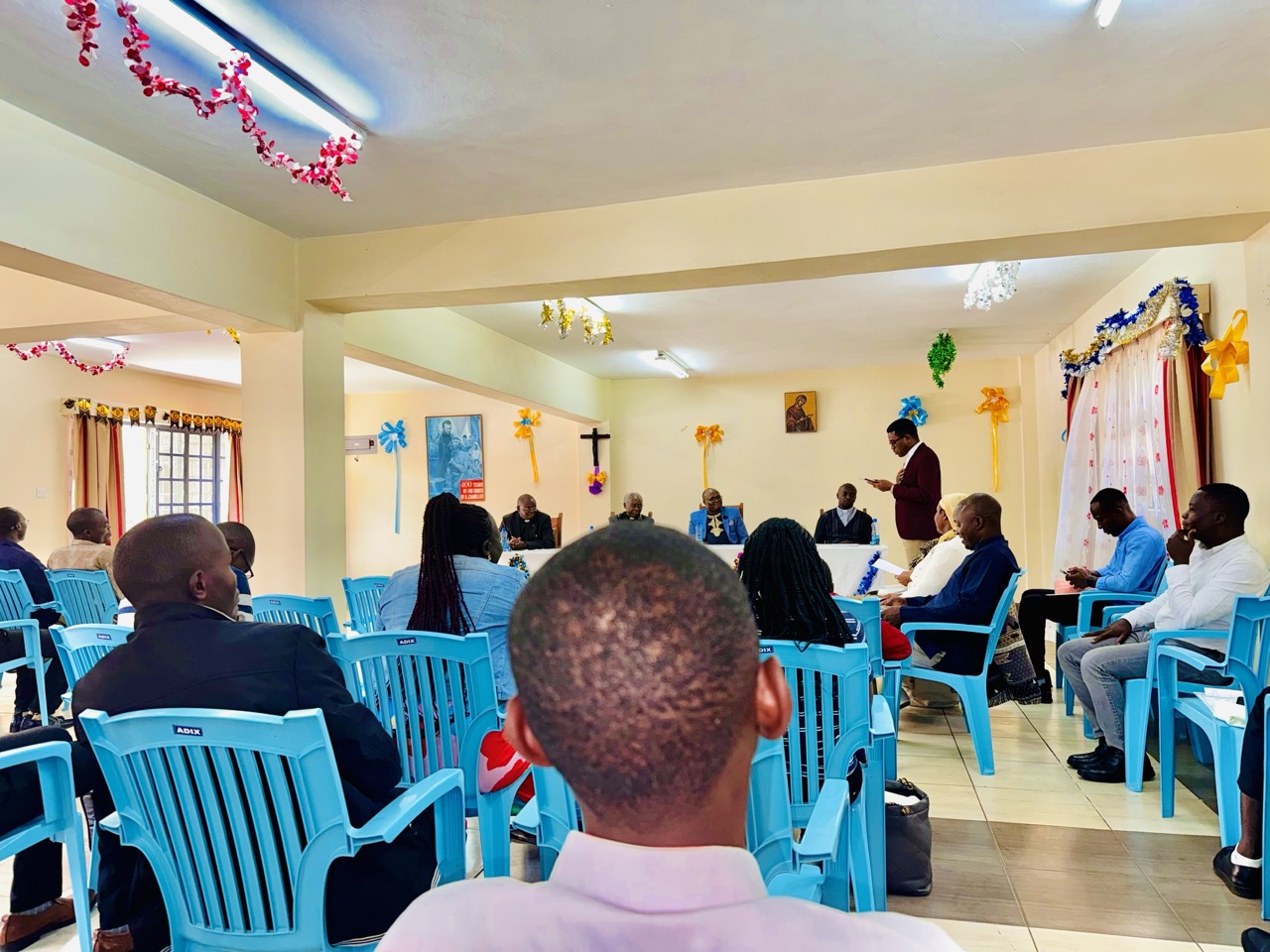
The center offers an opportunity where individuals celebrate shared values as they build on their vision of care together. It seeks to enable integration and transition from knowledge building to application of many years of learning experiences. This training program will be an essential part to those preparing for parish /congregational ministry, hospital chaplaincy, lay ministry, teaching and /or pastoral counselling. CPE program therefore, seeks to provide quality training necessary for care and work as a professional in whichever area an individual chooses now and in the future
Servants of the Sick Training Centre for Healthcare Ministry seeks to integrate medical, social, psychological and spiritual care for people of all faiths already involved in healthcare ministry or community health and those being called to care for the sick as chaplains and pastoral caregivers.
Observing and acknowledging the value and resource of spirituality in the life of the human person, the need for people trained in pastoral care and counselling and the health situation of the people of Kenya and Africa, this initiative seeks to train, educate and encourage willing, qualified people of all faiths to give quality pastoral care to the sick and needy of all religions and cultures in the various healthcare, congregational and community settings of Kenya and Africa as a whole.
Supporting the vision and mission of the Servants of the Sick Training Centre for Healthcare Ministry are values in keeping with the Scriptures, Christian beliefs, the ecumenical spirit of the Roman Catholic Church, the charism of the Servants of the Sick (Camillians), our African culture and context, and organizations which share our vision and mission:
Brings theological students, ministers, hospital visitors and pastoral caregivers of all faiths into supervised encounters with persons in crisis in hospital and community settings. Students develop new awareness of themselves and of the needs of the people to whom they are called to minister through intense involvement with persons in need and responses from peers, supervisor, and lecturers. Theological reflection on specific human situations gives students new understanding of ministry within the African context. Skills are developed in interpersonal and interprofessional relationships as students interact with interdisciplinary teams in the process of helping persons.
The heart of CPE is ministry with people and learning from that ministry through reflection, discussion and evaluation with the peers and supervisor.
CPE is an experience in faith based “process” education, which has been shaped by history, yet responds to the present cultural developments, which affect pastoral formation.
The heart of CPE is ministry with people and learning from that ministry through reflection, discussion and evaluation with the peers and supervisor.
In the CPE experience, the student utilizes verbatims of pastoral encounters, pastoral care reports, case studies, and discussions to present ministry for supervision.
Seminars focus on what is happening to the caregiver as much as on what is happening with patients and clients receiving care. Discussions assist students in understanding theological issues from their experiences and behavioural sciences in order to think critically about their pastoral practice, theology, social structures, and the human condition.
A dynamic learning group of four to nine students provides opportunities for development of pastoral identity, mutual supervision, caregiving, challenge and appreciation.
Richard C. Cabot conceived of clinical pastoral education (CPE) as a method of learning pastoral practice in a clinical setting under supervision. Anton T. Boisen enlarged the concept to include a case study method of theological inquiry -- a study of “living human documents.” William S. Keller began supervising theological students in case study methods, believing pastoral practice was complete only as it addressed contributing social conditions. As CPE developed, other leaders opened the doors to integrating knowledge from medicine, psychology and other behavioral sciences into pastoral practice.
The Association for Clinical Pastoral Education, Inc. (ACPE) formed in 1967 after some forty years of experience, development and practice of clinical pastoral education by several organized but uncoordinated groups. The groups merging to form ACPE included the Institute of Pastoral Care, Inc., Council for Clinical Training, Inc., Association of Clinical Pastoral Educators, and the certification and accreditation functions of the Lutheran Council in the U.S.A. Thus ACPE became the standard setting, accrediting, certifying resource agency in the field of clinical pastoral education. It accredits institutions, agencies and parishes as clinical pastoral education centers to offer programs of clinical pastoral education and certifies supervisors to conduct these programs.
In 2009 Organization of Professional Chaplains of Eastern Africa (OPCEA) was formed to set standards, accredit and certify Clinical training education in Eastern Africa.
OPCEA accredited centers offer clinical pastoral education as: part of theological education; training for pastoral ministry; training for institutional chaplaincy; training for pastoral counseling; training for certification as a supervisor of clinical pastoral education; and training for other specialized ministries. Theological schools give academic credit for clinical pastoral education according to the credit system of each school.
Welcome to the Servants of the Sick CPE Training Centre. This center offers an opportunity where individuals celebrate shared values as they build on their vision of care together.
COPYRIGHT © 2025 | SOSCPE TRAINING CENTRE